Sản phẩm


.svg)


.svg)


In 2026, the targeting isn't done by you — it's done by your creative. As social platforms move toward full-funnel automation, the visuals, copy, and formats you put into the ad auction are the primary signals that tell machine learning algorithms exactly who your buyers are. If you're a print-on-demand seller spending money on ads, this changes everything about how you should approach design.
Here's what the data shows: AI-driven PPC bid management and creative optimization can reduce wasted ad spend by around 37% and increase overall ad ROI by roughly 50%. That's not a marginal improvement — it's the difference between a profitable store and one that bleeds budget. And yet the majority of sellers still approach ad design the way they did five years ago, ignoring the signals the algorithm actually needs to do its job.
This guide breaks down what changes, and what it means for how you build your visual assets.
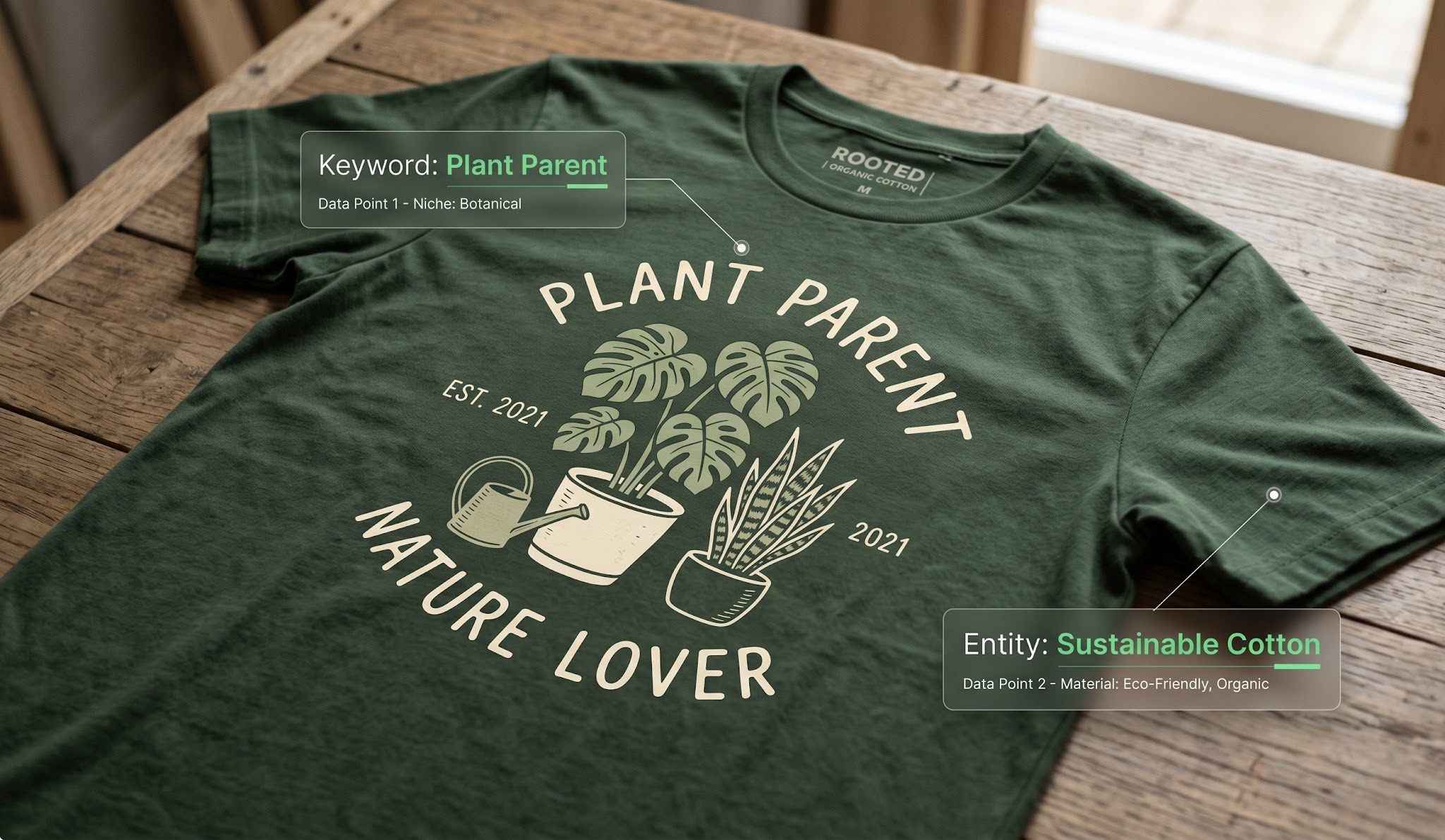
By 2026, ad platforms have become sophisticated at deconstructing images into objects, entities, and sentiments — all in milliseconds. The algorithm isn't just reading your ad copy; it's analyzing the image itself to predict which users are most likely to respond.
Prioritize a clear focal point. Cluttered compositions with competing elements make it harder for object detection models to quickly classify what's being advertised, slowing your campaign's learning phase. Simple, high-contrast imagery with a single dominant subject gives the algorithm a clean signal from the start.
Make your overlay text do double duty. The words on your image aren't just for human readers — they're parsed as semantic data. If your overlay reads something like "Sustainable Vegan Leather" or "Dog Mom Life," the platform associates your ad with corresponding audience segments. For POD sellers, this is a significant lever: descriptive, niche-specific text on your creatives can guide delivery toward highly relevant buyers without any manual audience targeting on your part.
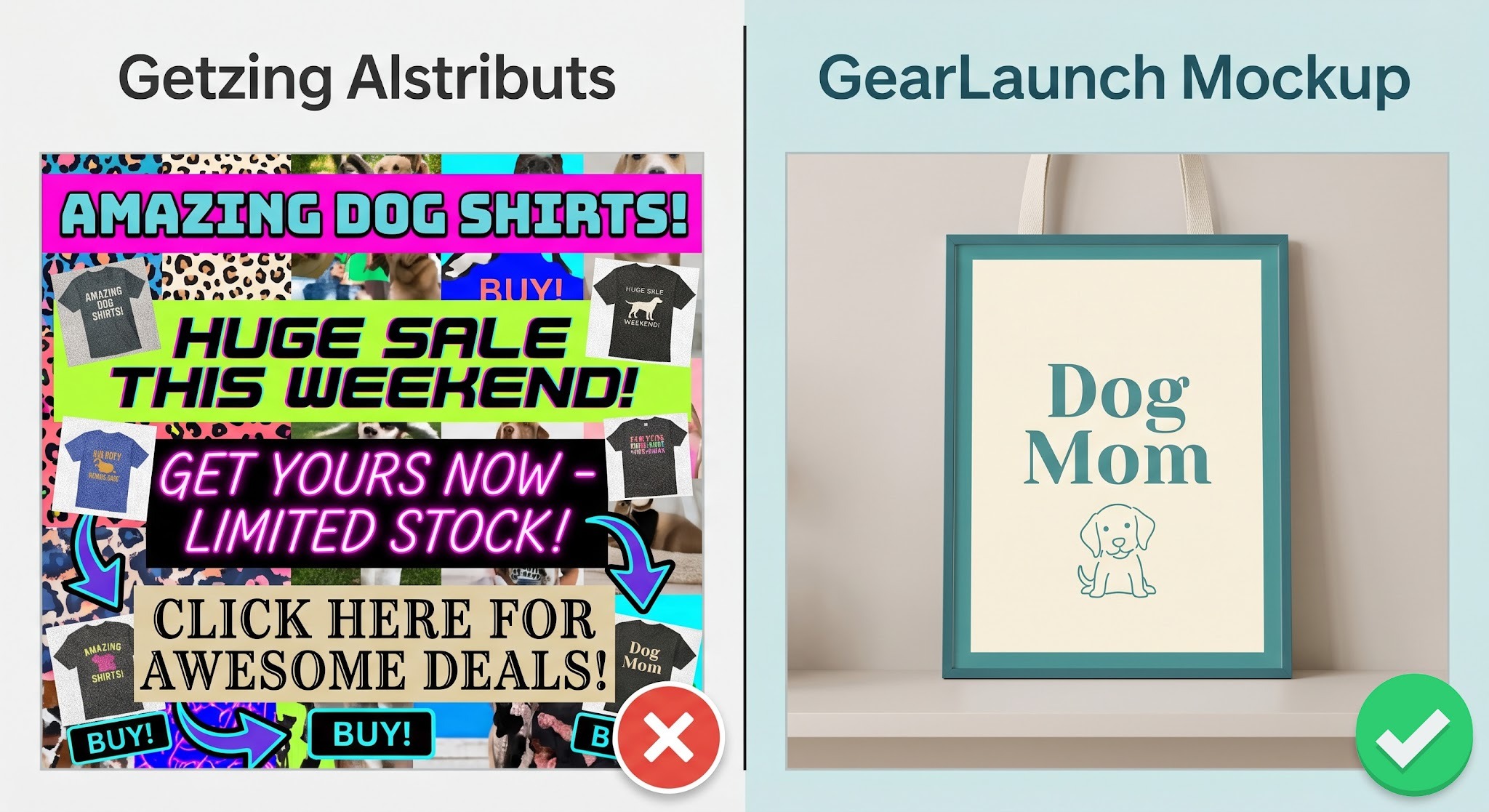
Avoid visual noise. Overly complex backgrounds, too many fonts, and layered graphics create "incorrect targeting" — the platform's algorithm misclassifies who should see your ad, and you pay for impressions that will never convert. Minimalist backgrounds are not just a design trend; they're a performance strategy.
If you're exploring what product visuals perform best for your niche, the GearLaunch Product Selling Guide is a practical starting point for understanding what converts across different categories.
The 2026 platform algorithm is optimized for variety. Feeding it a single creative and expecting it to find your buyer is like giving a search engine one keyword — technically possible, but far from optimal.
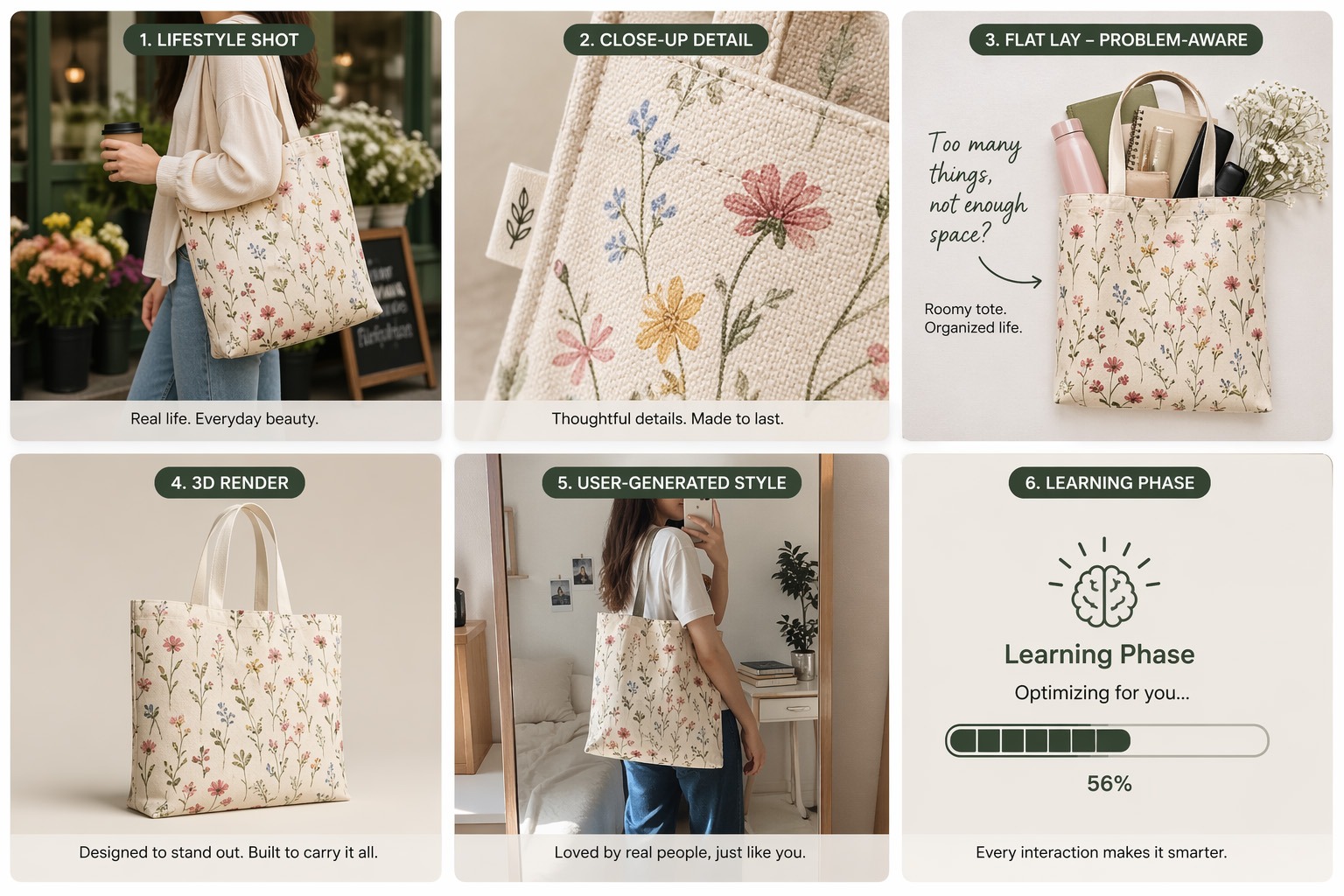
Psychographic segmentation starts in the design phase. Create distinct asset sets for different buyer mindsets. Problem-aware buyers respond to creative that names a pain point directly ("Always forgetting anniversaries?"). Outcome-focused buyers respond to aspiration ("The mug they'll reach for every morning"). These aren't just copywriting considerations — they're creative signals that the algorithm uses to segment your audience delivery.
Test visual formats deliberately. Lifestyle photography featuring real people in authentic settings performs differently than clean product-only shots or 3D renders. Platforms now measure eye-tracking patterns and dwell time as engagement signals. Running both formats — and letting the algorithm determine which attracts your high-value buyer — is more efficient than guessing in advance.
Aim for at least five distinct visual "hooks" per campaign. This gives the machine learning system enough variation to optimize delivery. Think of it as providing a richer training dataset: the more variation you give the algorithm, the more precisely it can identify your best buyer profile.
For POD sellers, this translates directly to product variety as well. Offering your best-performing design across multiple formats — from all-over-print apparel to mugs and tumblers — gives you more creative hooks to test while serving the same customer intent.
Facebook's ad algorithm doesn't just deliver your ad — it uses your creative to decide who sees it. When you launch a campaign, Meta's system enters a learning phase, typically requiring around 50 optimization events before it stabilizes delivery. During this window, it's reading your image, overlay text, and video engagement patterns as audience-matching signals. A clear product focal point helps object detection classify your ad faster. Niche-specific text on your creative — "Dog Mom," "Veteran Owned," "Plant Parent" — acts as a semantic tag that pushes your ad toward relevant interest clusters, even without manual audience targeting. The more distinct creative variations you feed it (aim for at least 5 per campaign), the faster it finds your best-performing buyer segment. Broad or vague creative slows the learning phase and inflates your cost-per-result — the algorithm needs specificity to do its job.
Ad formats are no longer limited to banners and feed posts. In 2026, your creatives appear inside AI search responses, AR overlays, and streaming platforms. Each placement has different design requirements.
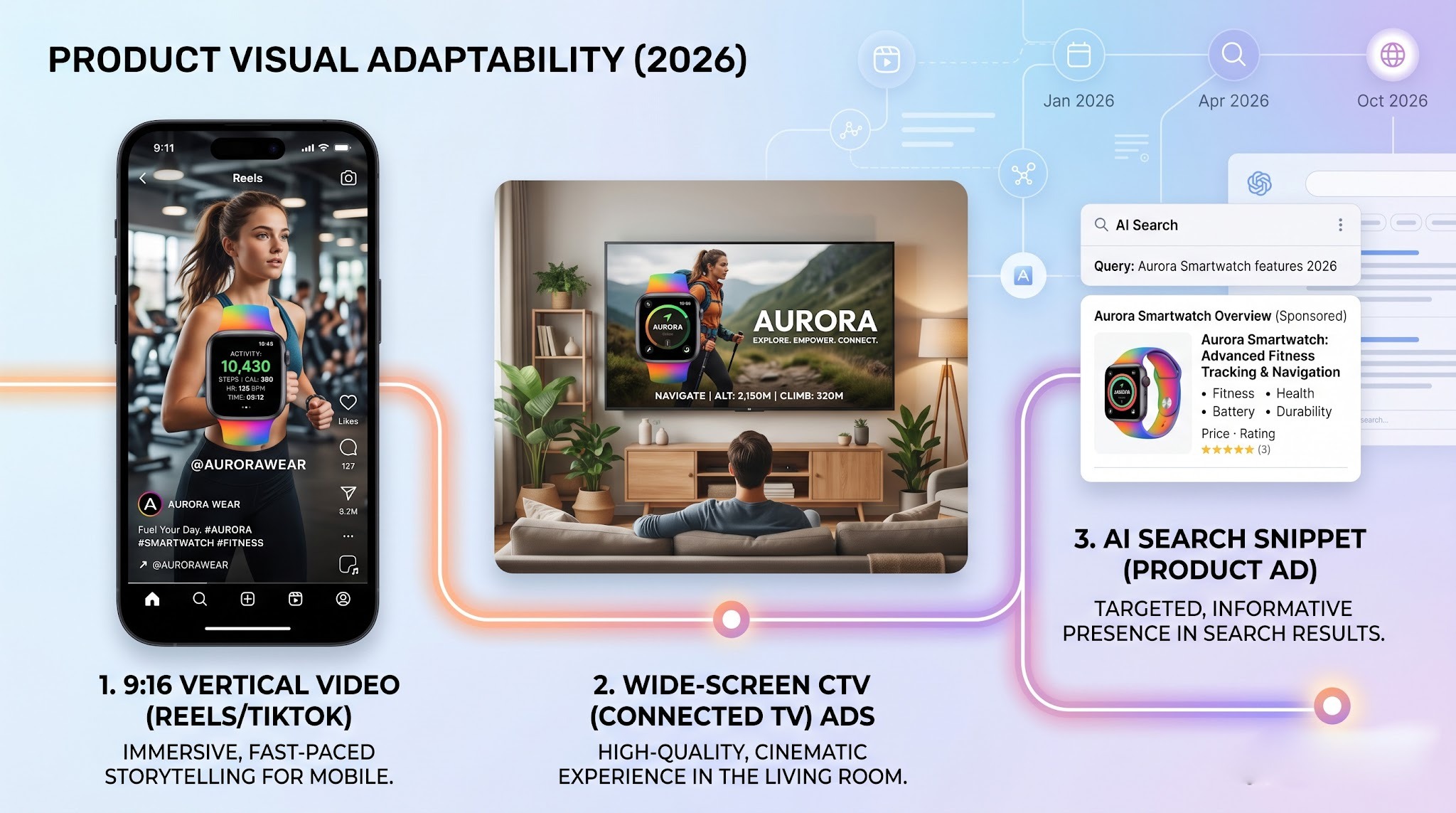
Vertical-first video is now table stakes. Video ad spend continues growing at roughly 9.5% annually, and the format's performance advantage is substantial: video ads across platforms generate significantly higher engagement than static image posts. For POD sellers, this means short-form product videos — even simple rotation clips or lifestyle footage — are worth the investment. The first 1.5 seconds must function as a visual hook that stops the scroll. If your opener doesn't create immediate pattern interruption, the platform reads low engagement signals and deprioritizes your ad.
Native-looking creative outperforms "ad-like" creative. With traditional search traffic declining as more users shift queries to AI chatbots, ads integrated into informational feeds need to look like they belong there. Loud, high-pressure creative generates friction. Designs that feel contextually relevant to the surrounding content drive stronger engagement signals — and more importantly, attract the right buyers rather than impulsive clicks.
Connected TV (CTV) is now a realistic channel for e-commerce brands. U.S. CTV ad spending reached $33.35 billion in 2025 and is projected to grow to $46.89 billion by 2028, surpassing traditional TV for the first time. More than one-fifth of U.S. viewers report completing a purchase after seeing a CTV ad, according to Statista. The living room is now a direct conversion channel — and it's no longer exclusively available to brands with massive media budgets.
Shoppable formats close the loop. Interactive elements like shoppable QR codes in video and AR-ready product visuals reduce the gap between awareness and purchase. If your ad can let a viewer take action in-context rather than routing them through multiple steps, conversion rates follow.
One of the underappreciated dynamics in AI-driven ad delivery is how platforms evaluate brand consistency. Algorithms that have seen your brand before — recognizable color palette, consistent typography, familiar visual language — classify your creative more reliably, which improves targeting accuracy.
The practical application: use two to three primary brand colors consistently across all creative assets. This isn't about aesthetics alone. Consistent visual branding builds what some performance marketers call "compound trust signals" — the platform begins to associate your color fingerprint with a stable, established brand, which influences how your creative is prioritized and to whom it's delivered.
For POD sellers building their brand from the ground up, this is easier to implement than it sounds. Decide on a primary color palette before you build your ad creative, and apply it consistently — in overlay text, background choices, and any graphic elements. Customers and algorithms alike respond to that coherence.
Creative quality drives ad delivery, but only when the algorithm has clean data to learn from. Your Conversions API (CAPI) or server-side event tracking is the pipeline that tells the platform which creative combinations are actually producing purchases — not just clicks.
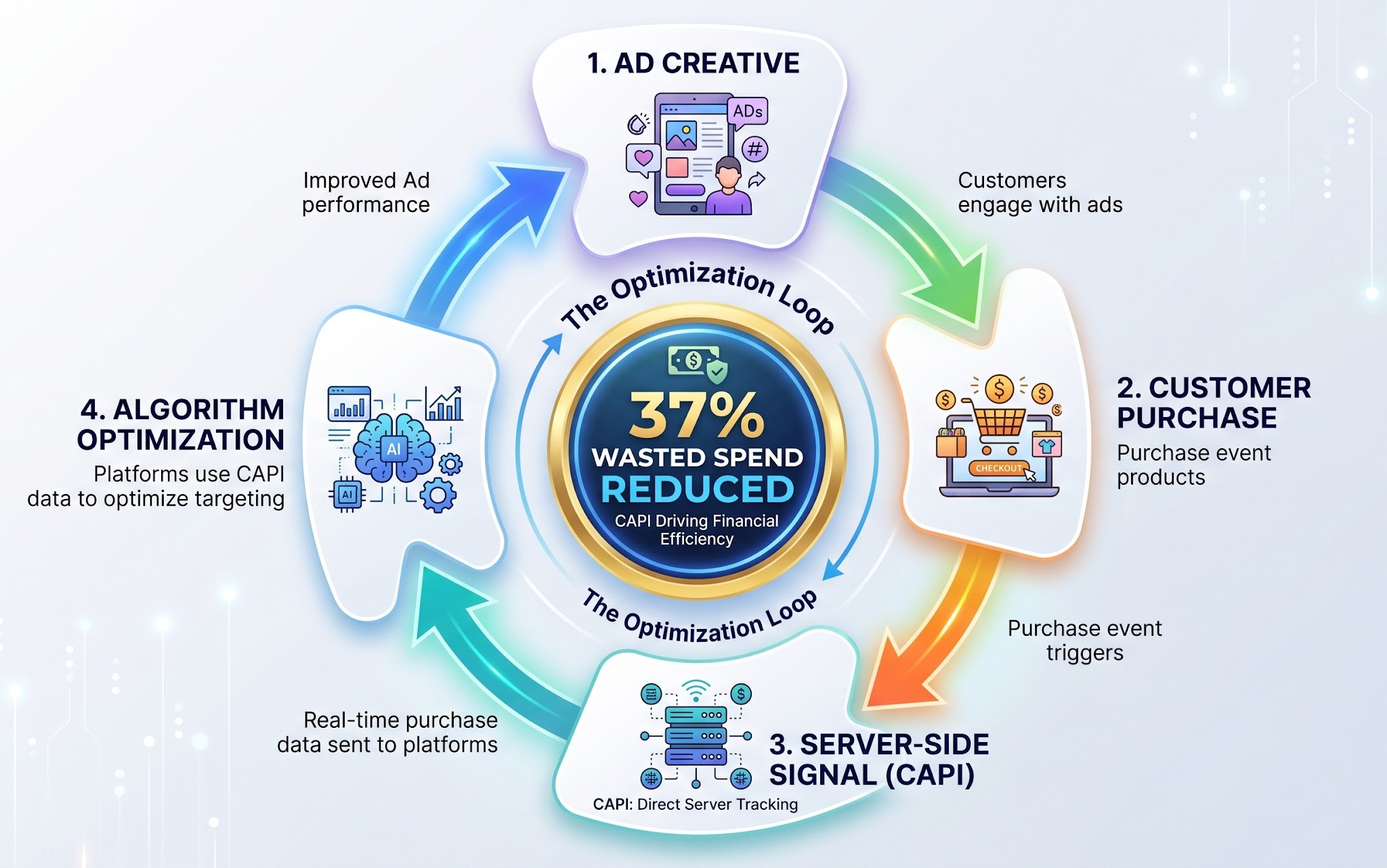
Targeting with first-party data has become essential: 90% of marketers say first-party data improves ad performance, and the shift away from third-party cookies has made this infrastructure a baseline requirement rather than an advanced tactic. If your conversion events are under-reporting — capturing 70% of purchases instead of 95%+ — your algorithm is optimizing on incomplete information, which degrades delivery quality over time.
Getting this right doesn't require a technical background. Most major e-commerce platforms have native CAPI integrations, and GearLaunch's platform documentation walks sellers through connecting their tracking properly. Think of it as the feedback loop that makes everything else in this guide actually work.
Before launching your next campaign, work through these questions:
How much budget can AI creative optimization actually save? According to data compiled by Adobe and sourced from Zebracat, AI-driven PPC bid management and creative optimization can reduce wasted ad spend by approximately 37% and increase overall ad ROI by around 50%. For POD sellers running consistent ad spend, that's a meaningful efficiency gain — the equivalent of recapturing a third of your non-performing impressions.
Why is "creative" considered the new targeting in 2026? As platforms have phased out third-party cookie tracking, algorithms have shifted to inferring audience intent from behavioral signals rather than tracking users across the web. Your creative — its imagery, text, format, and engagement pattern — becomes the primary signal that tells the platform who to show your ad to. Well-structured creative essentially does the audience targeting for you.
Do video ads really outperform static images for POD products? For most POD categories, yes — especially for lifestyle products where context matters. Video ads currently generate substantially higher engagement rates than static posts across social platforms, according to social media advertising benchmarks. Short clips showing a product in use, or even simple animated mockups, outperform flat product images in most head-to-head tests.
How do I make my ad design look "native" to AI and informational feeds? Avoid the visual cues that signal "advertisement" — loud borders, stock photo aesthetics, pressure-heavy calls to action. Instead, design creative that looks like something a person would actually share or engage with: authentic lifestyle imagery, clean product presentation, and copy that speaks to a specific interest rather than broadcasting to everyone.
Browse the full GearLaunch product catalog to find the right formats for your next ad campaign, or create your first product and start putting these strategies to work today.


.svg)
.svg)
.svg)